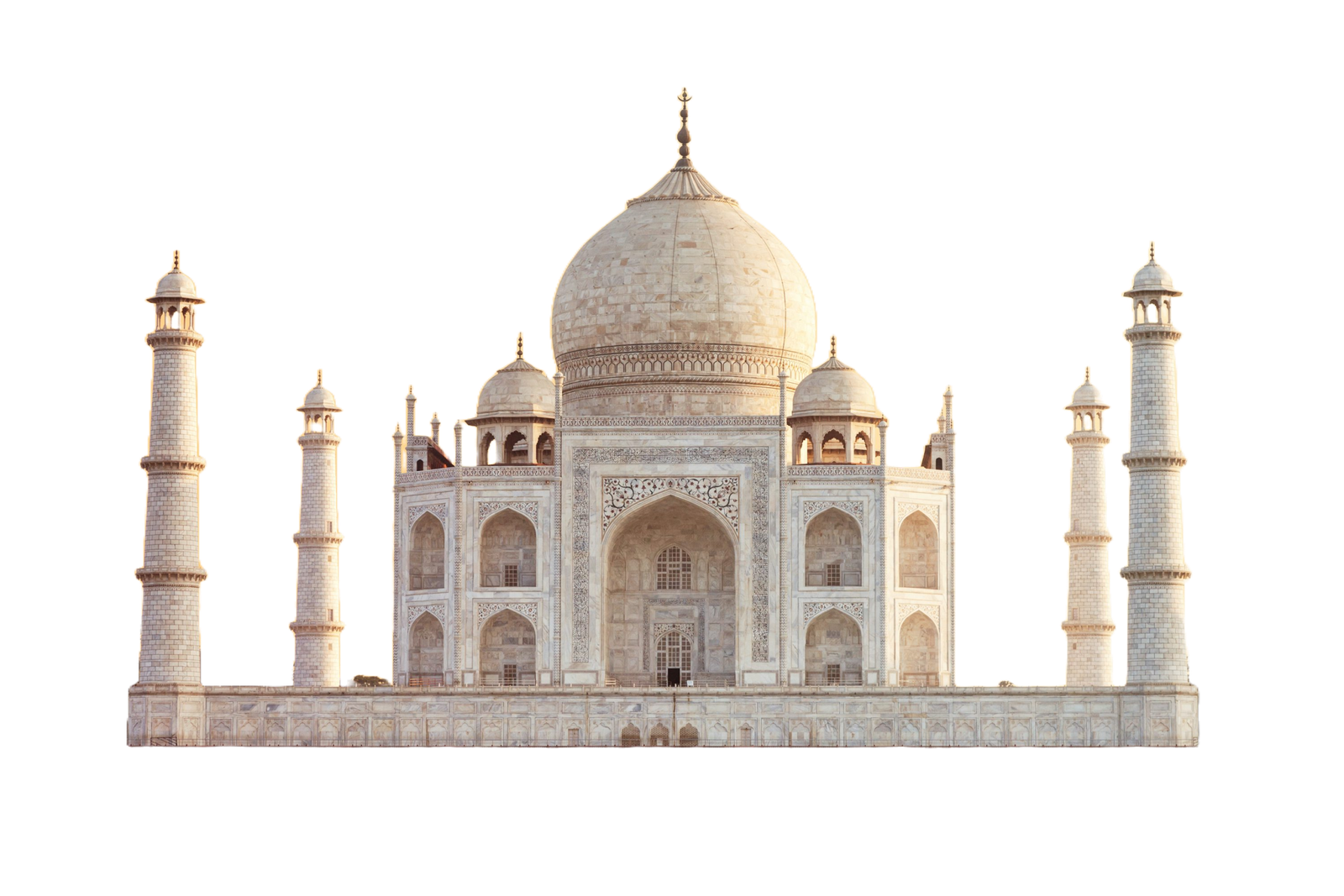
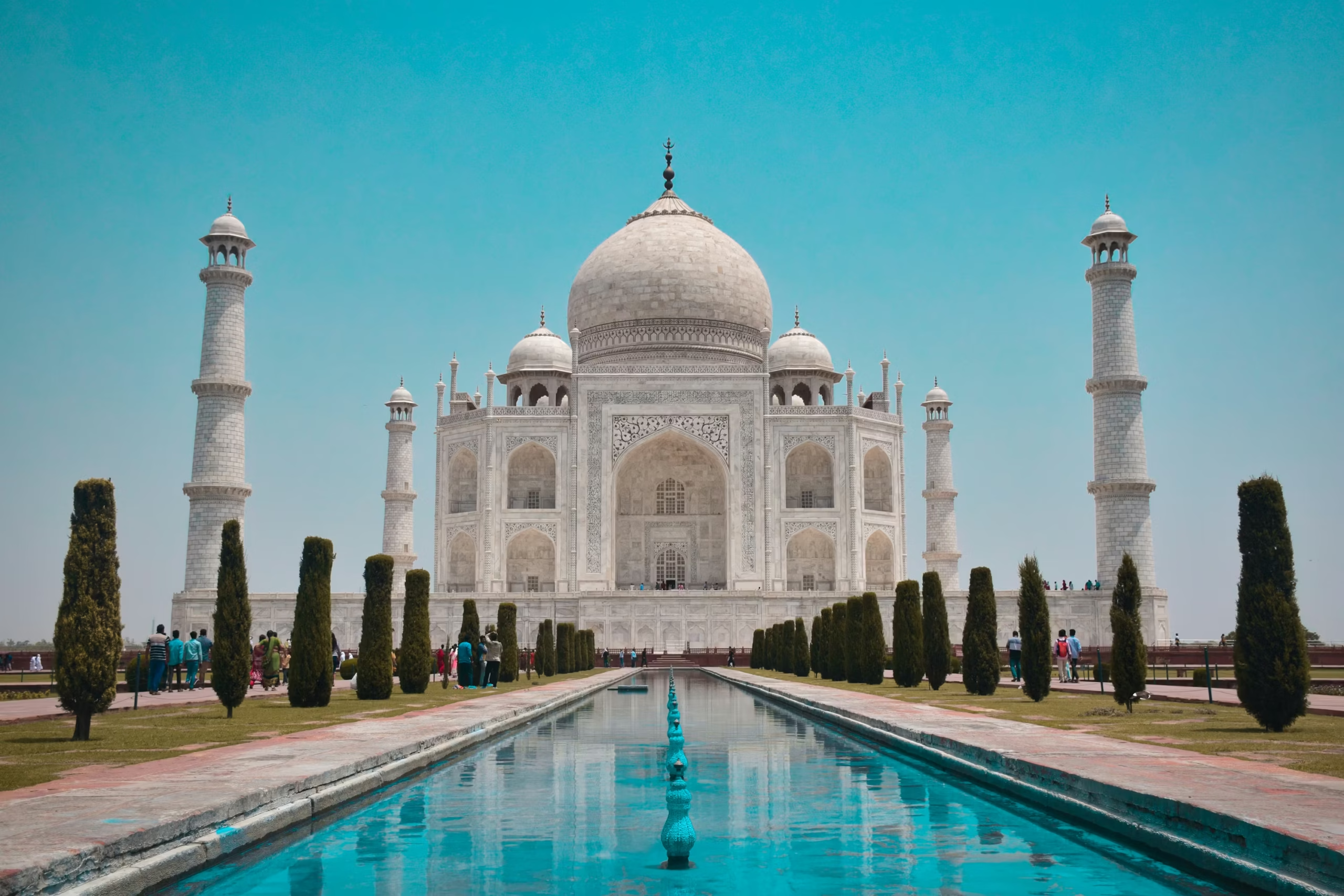
The world recognised the site in 1983 and declared the site as UNESCO World Heritage Site
Amazing Facts About Taj Mahal
-Name of Origin-
Rauza-i-Munawwara
“The Illuminated Tomb”
The name “Taj Mahal” is the corrupted syllable of “Mumtaz Mahal” (commonly used by the locals, as it was made for the favorite wife, the queen of Mughal Emperor Shah Jahan, called “MUMTAZ”). As per the Mughal texts, it was named Rauza-i-Munawwara.
Makrana
“The Global Heritage Stone”
The stone that was used is what gave it the term “illuminated tomb,” , MAKRANA
The stone was used in the construction of Taj Mahal and was also used in the construction of several iconic monuments such as the Ram Mandir in Ayodhaya, Taj Mahal in Agra and Masjid-e-Rasheed in Deoband and the Victoria Memorial in Kolkata.
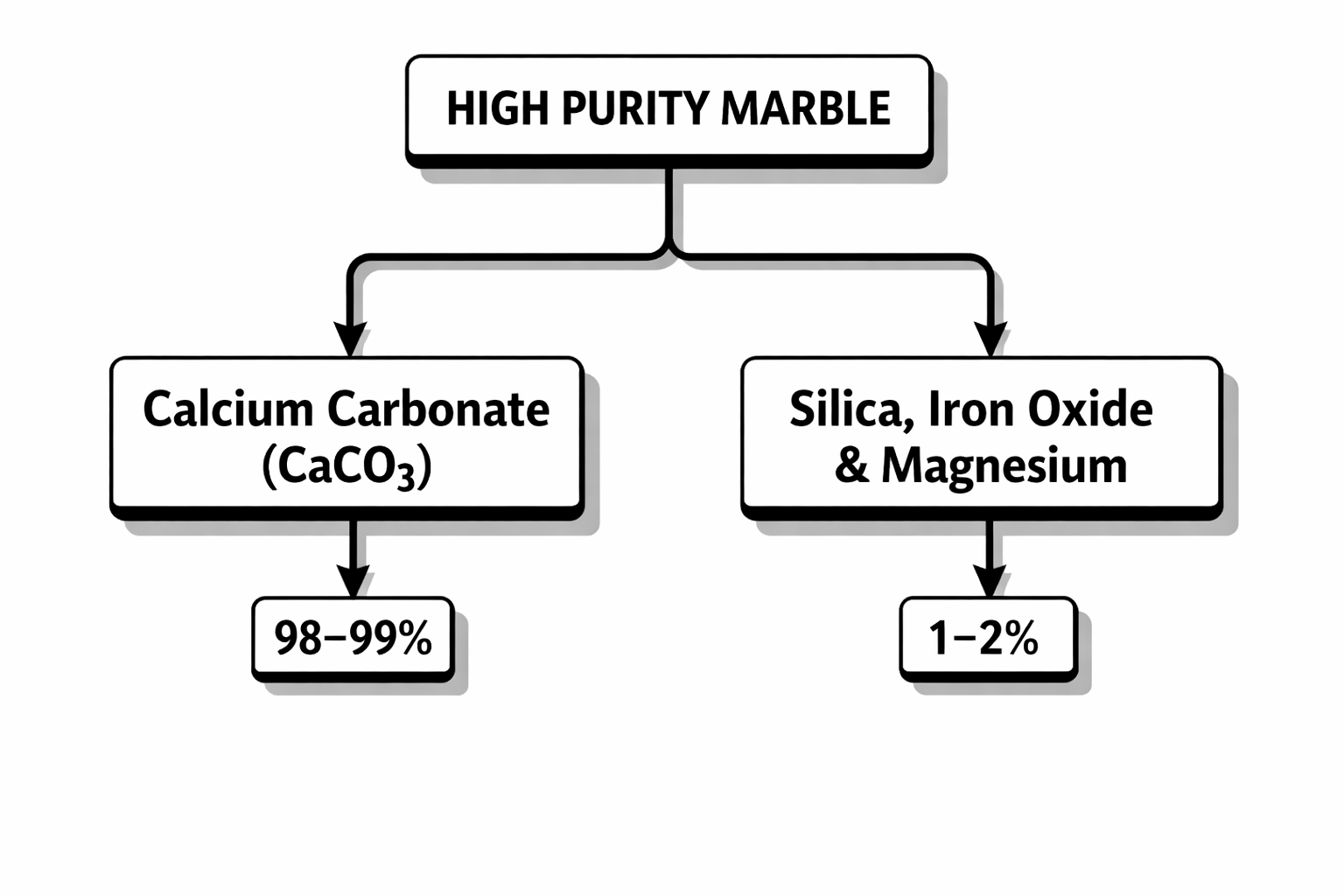
Makrana marble has a high percentage of calcium and is therefore resistant to water seepage. The marble is claimed to contain 98 percent of calcium carbonate and only 2 percent impurities; this property of Makrana marble helps it to stay the same proportion of white for a long period of time. The close interlocking property of the marble makes it strong, hard, and translucent.
Because of its translucent properties, it does not just reflect but glows.
-Name Of Origin-
Rauza-i-Munawwara
“The Illuminated Tomb”
The name Taj Mahal is the corrupted syllable of Mumtaz Mahal (commonly used by the locals, as it was made for the favorite wife, the queen of Mughal Emperor Shah Jahan called MUMTAZ).
The stone that was used is what gave it the term “illuminated tomb,” , MAKRANA
The stone was used in the construction of Taj Mahal and was also used in the construction of several iconic monuments such as the Ram Mandir in Ayodhaya, Taj Mahal in Agra and Masjid-e-Rasheed in Deoband and the Victoria Memorial in Kolkata.
Makrana marble has a high percentage of calcium and is therefore resistant to water seepage. The marble is claimed to contain 98 percent of calcium carbonate and only 2 percent impurities; this property of Makrana marble helps it to stay the same proportion of white for a long period of time. The close interlocking property of the marble makes it strong, hard, and translucent.
Because of its translucent properties, it does not just reflect but glows.
-Shades Changing Effects-
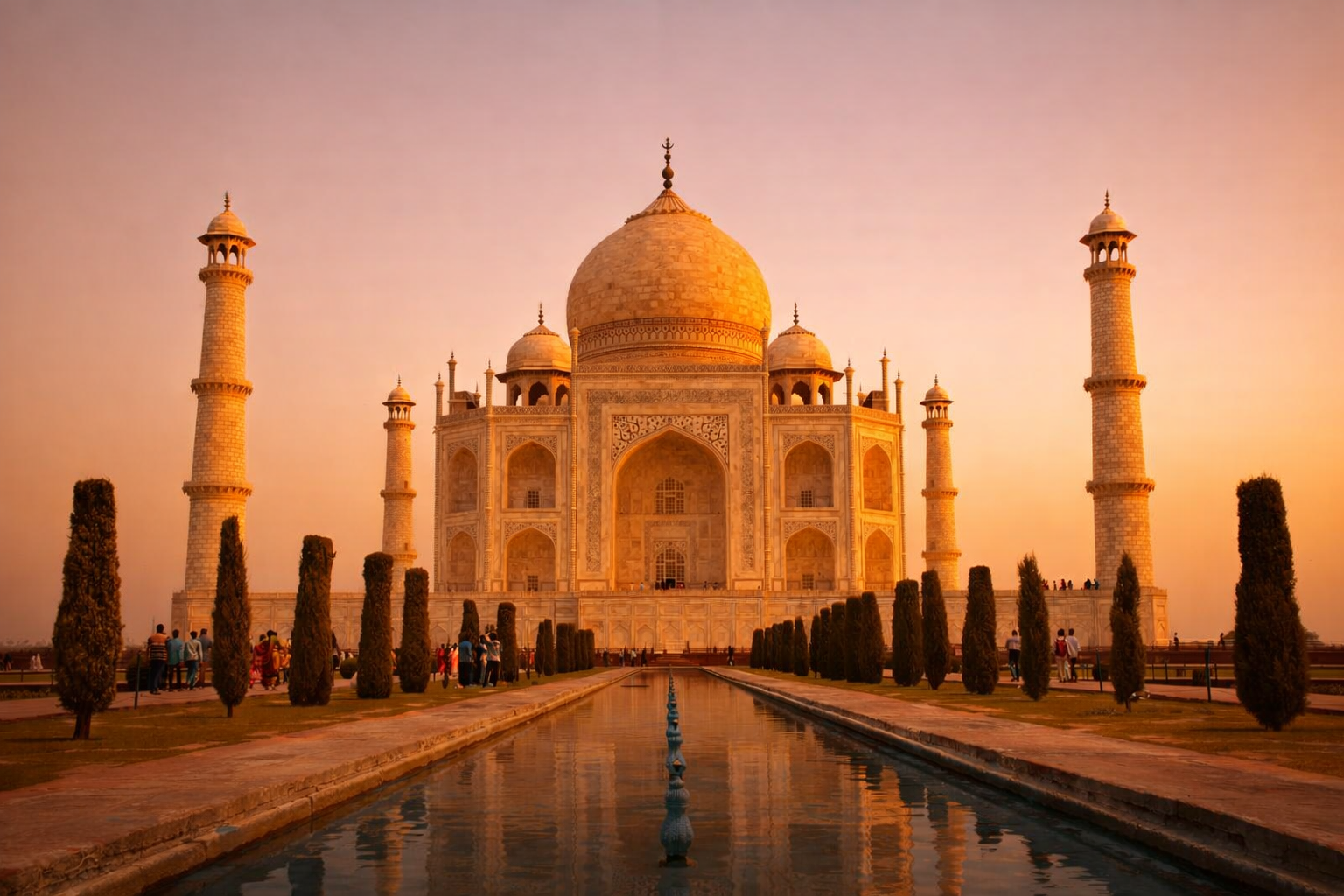
As the monument has wholely made by translucent glowing marble, it changes its colour many times throughout the day.
From the golden hour of sunrise to the ivory white effect during the daytime, it always gives you jaw-dropping moments of your lifetime.
Experience by yourself…
-Shades Changing Effects-
As the monument has wholely made by translucent glowing marble, it changes its colour many times throughout the day.
From the golden hour of sunrise to the ivory white effect during the daytime, it always gives you jaw-dropping moments of your lifetime.
Experience by yourself…
-Shades Changing Effects-
As the monument has wholely made by translucent glowing marble, it changes its colour many times throughout the day.
From the golden hour of sunrise to the ivory white effect during the daytime, it always gives you jaw-dropping moments of your lifetime.
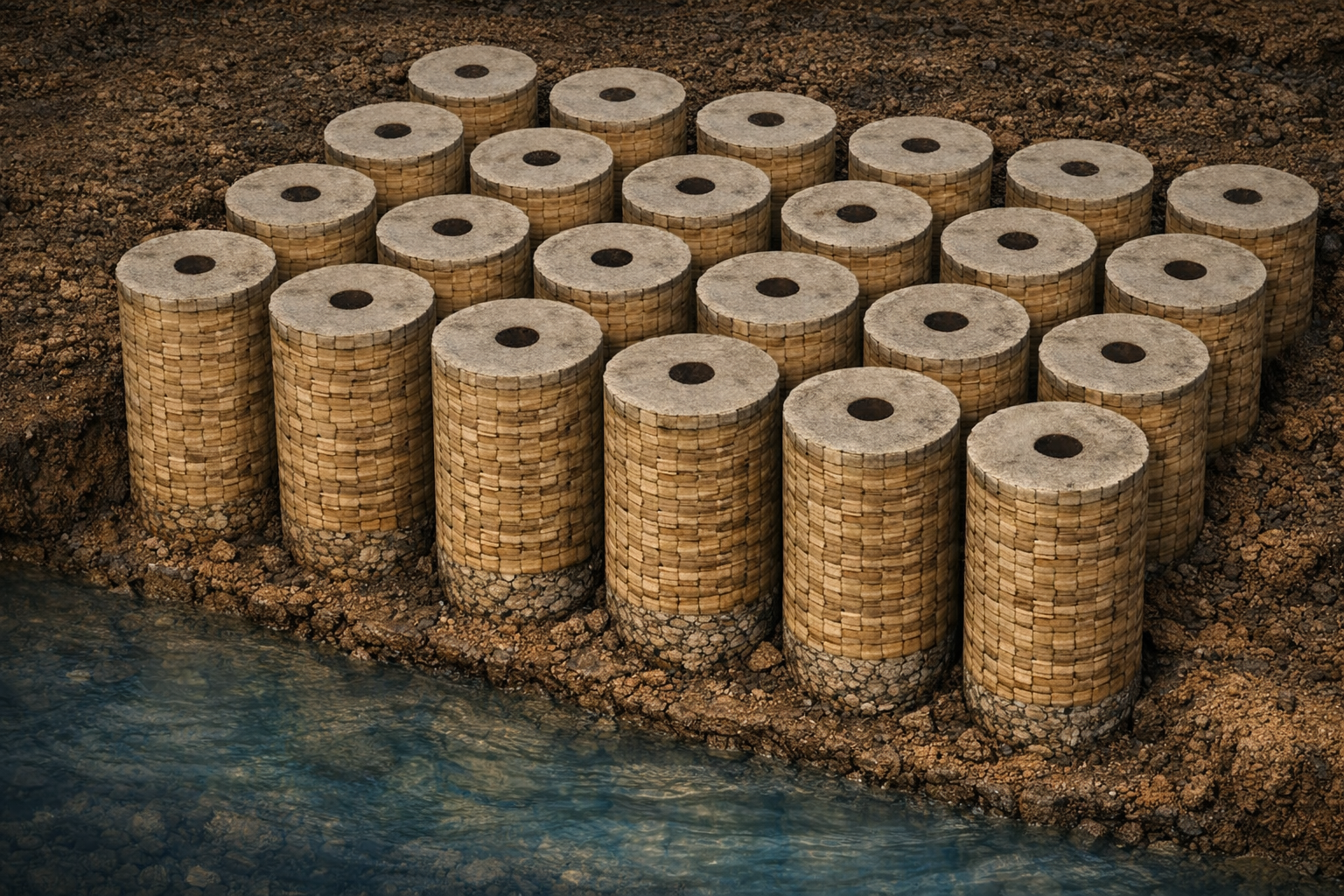
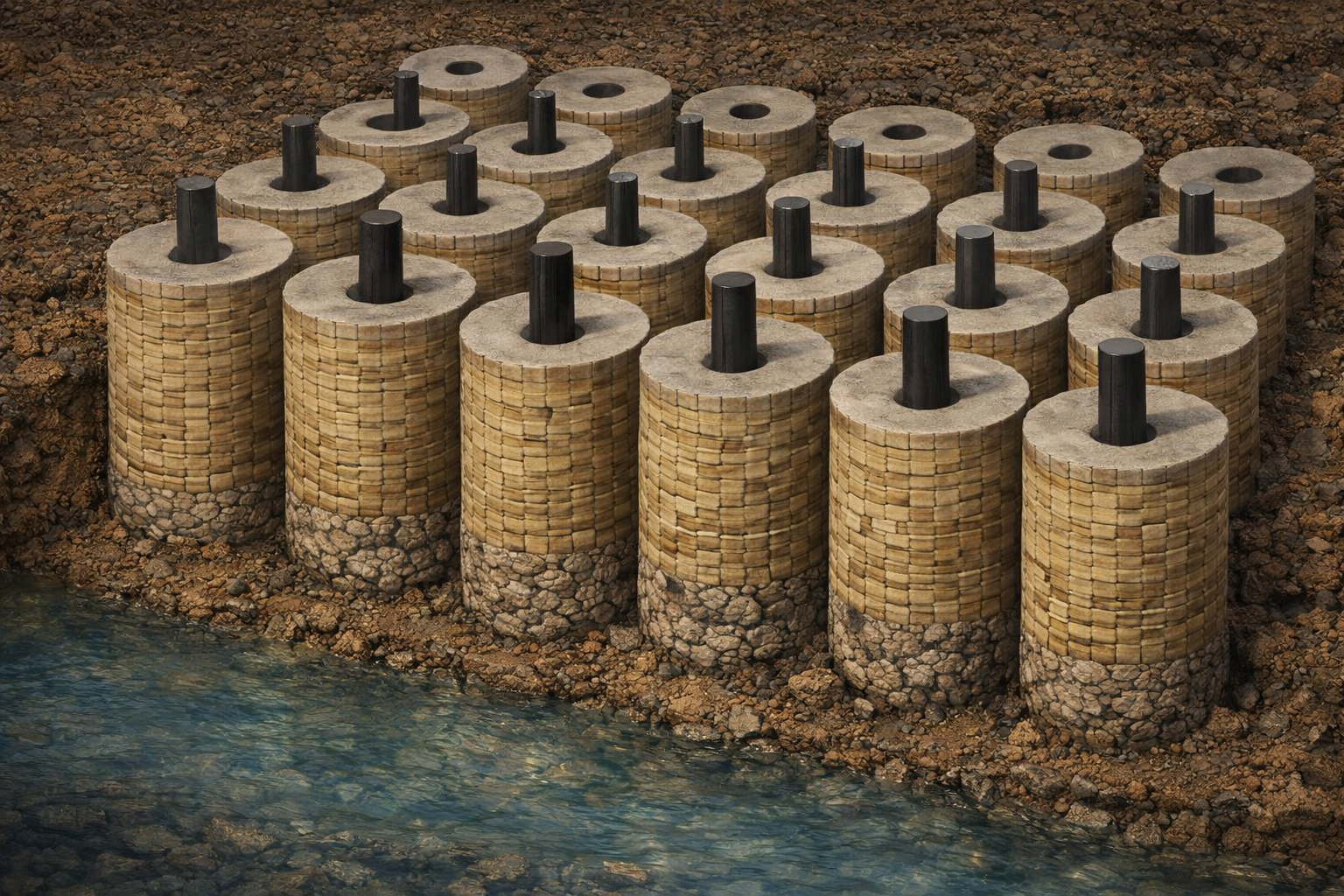
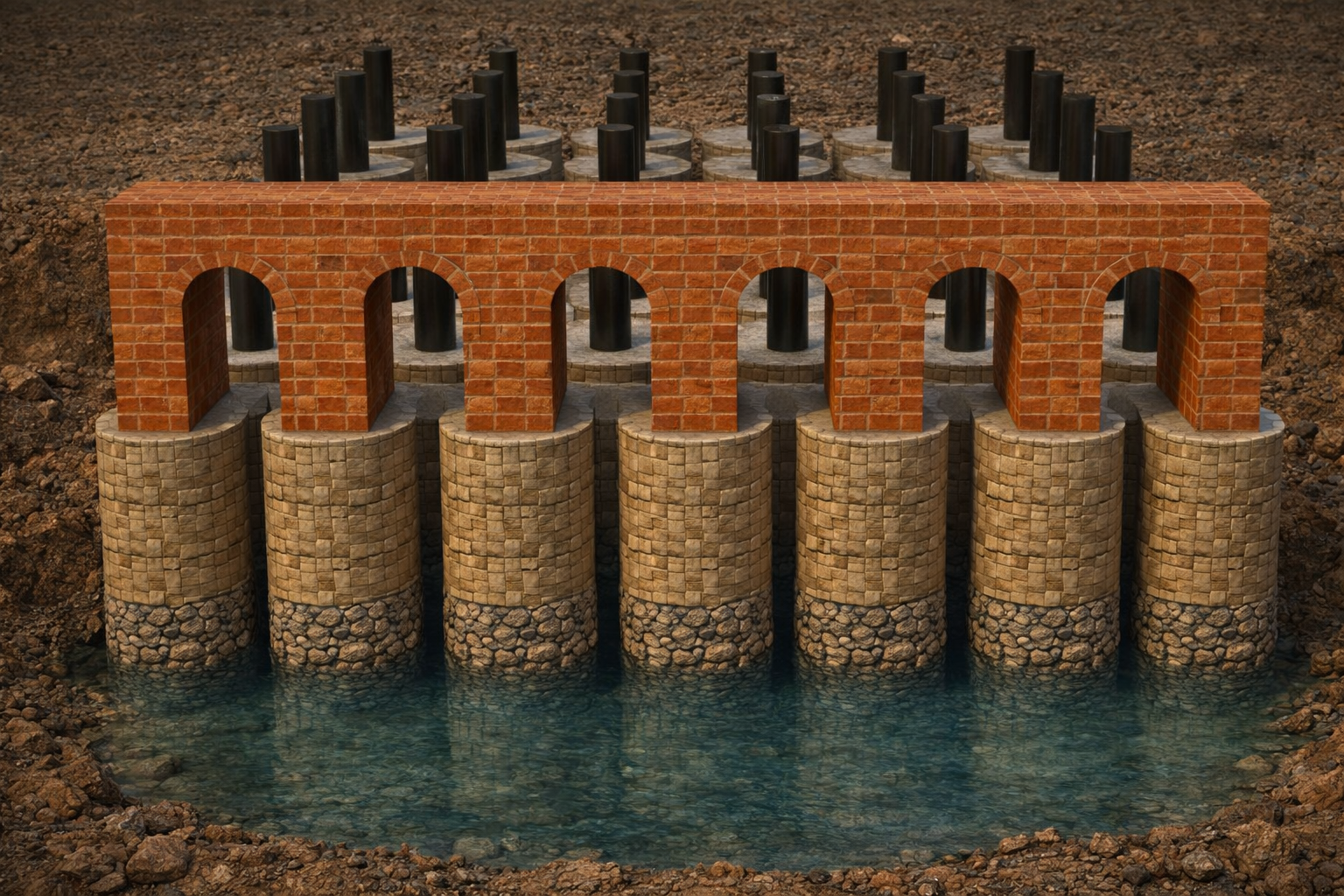
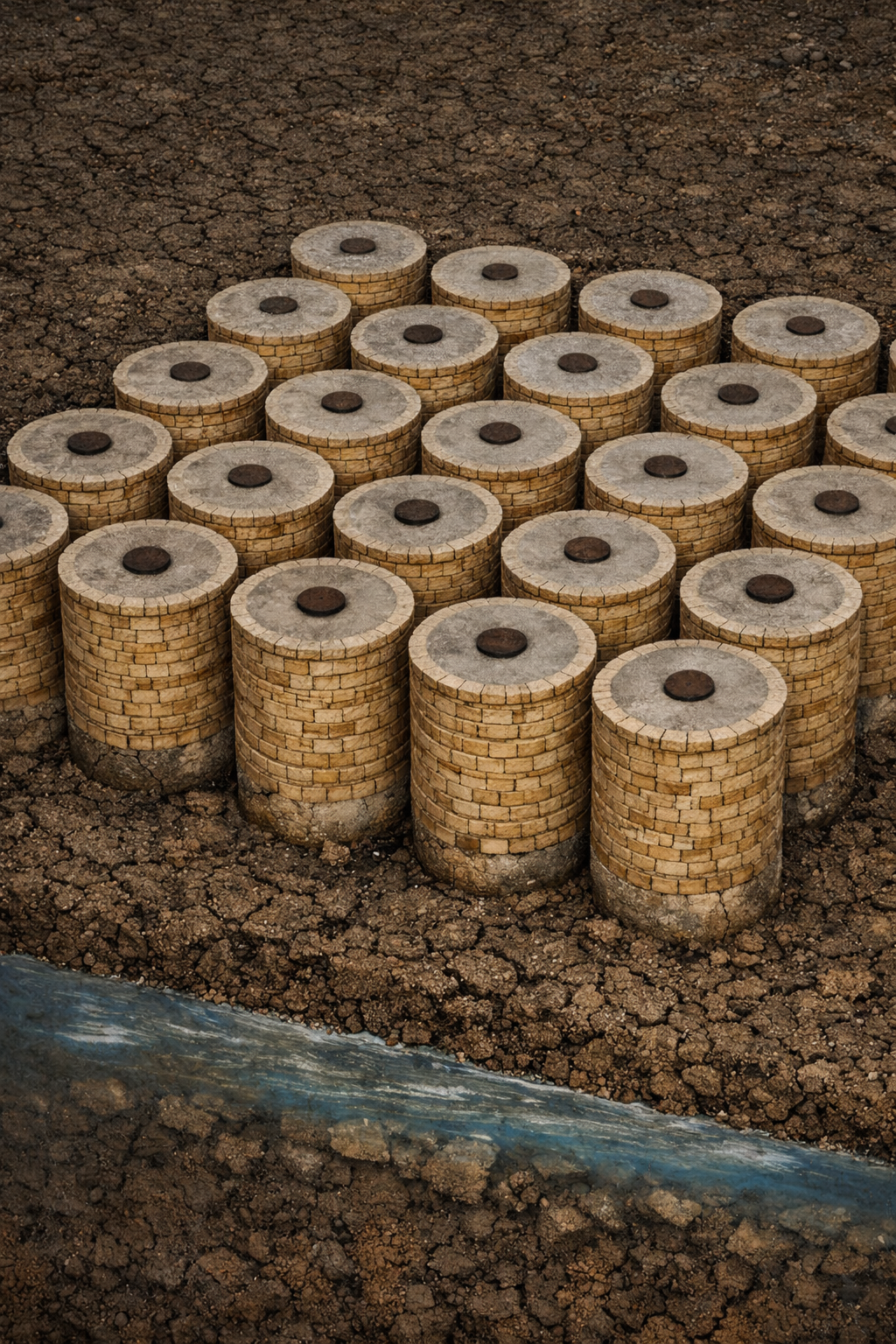
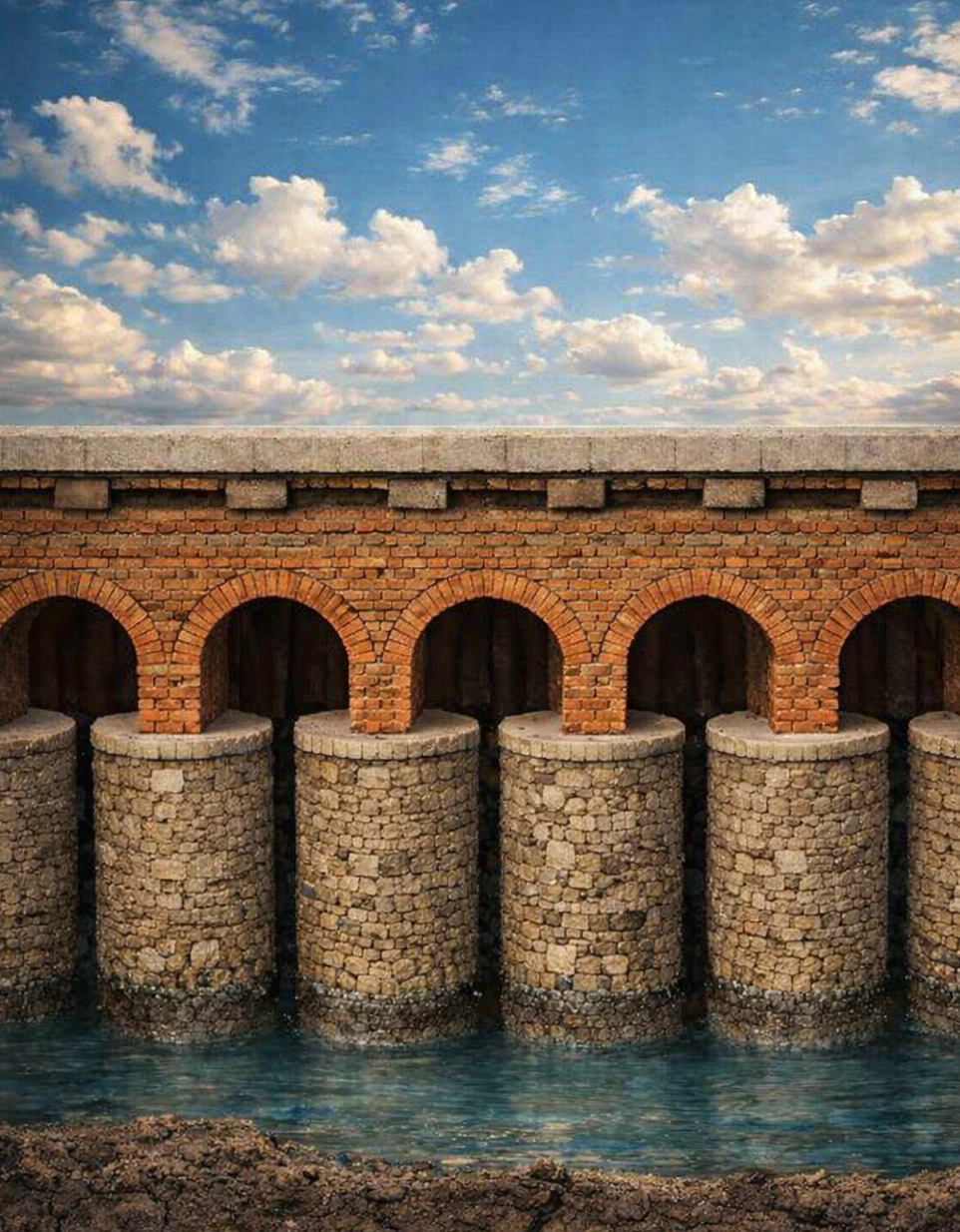
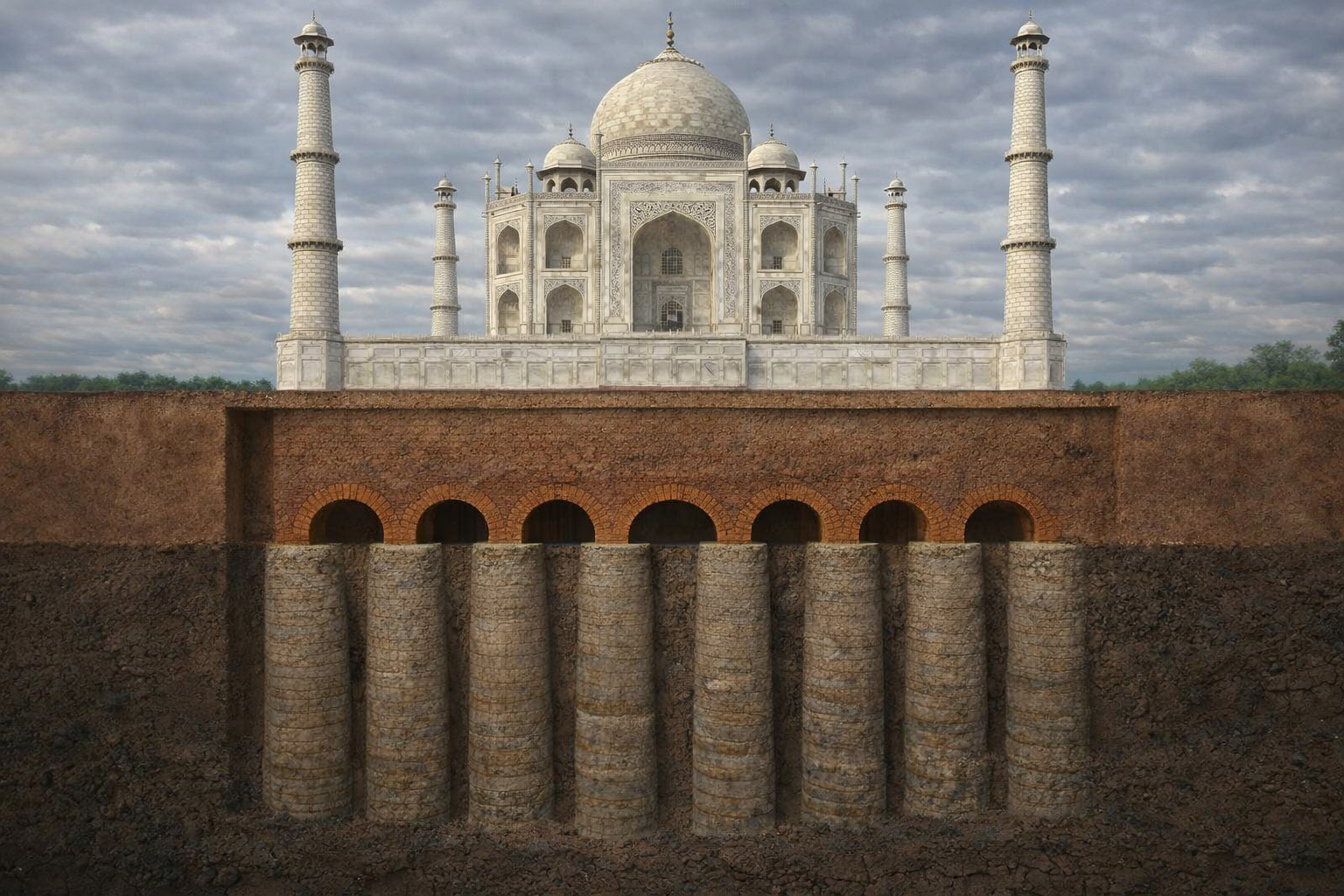
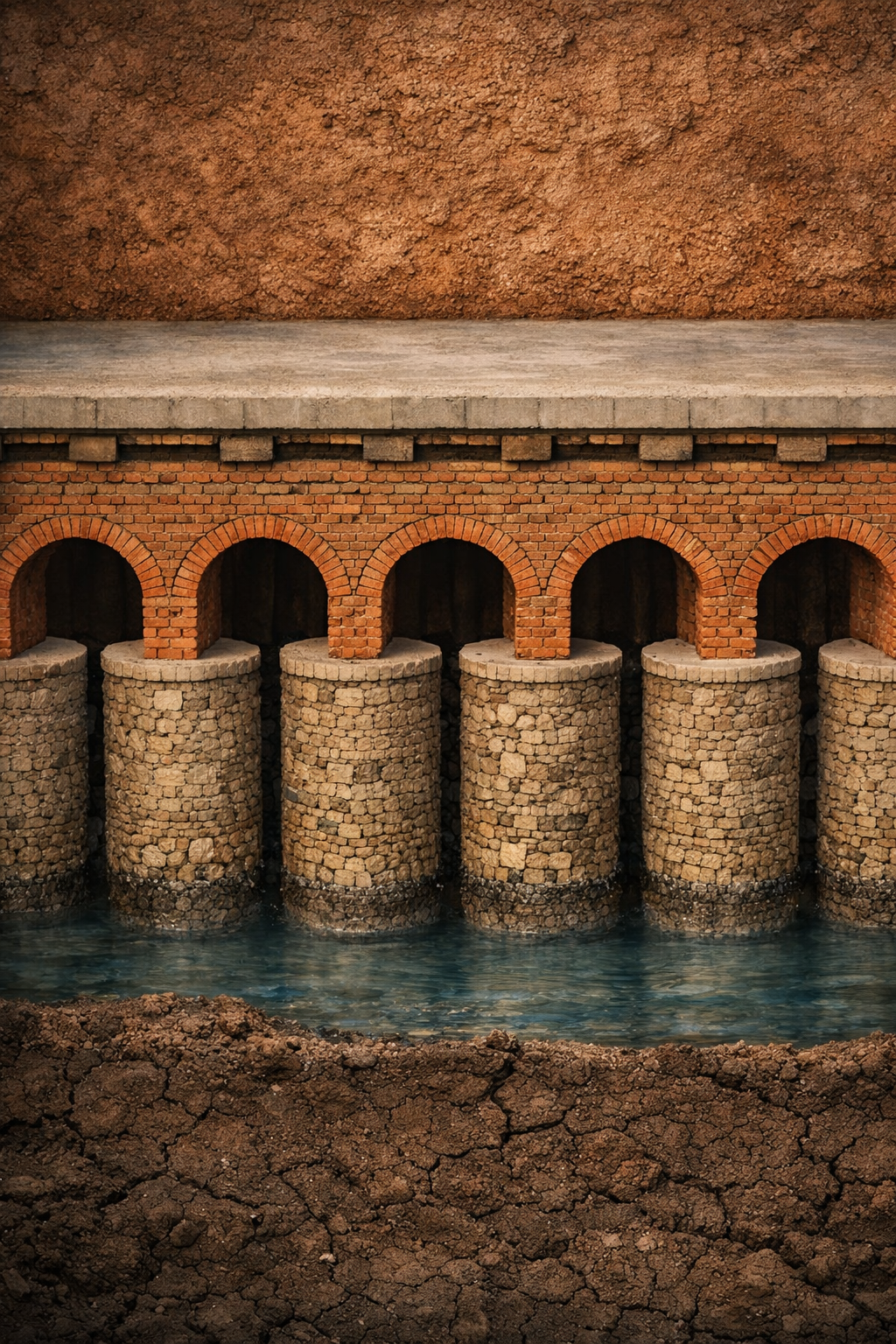
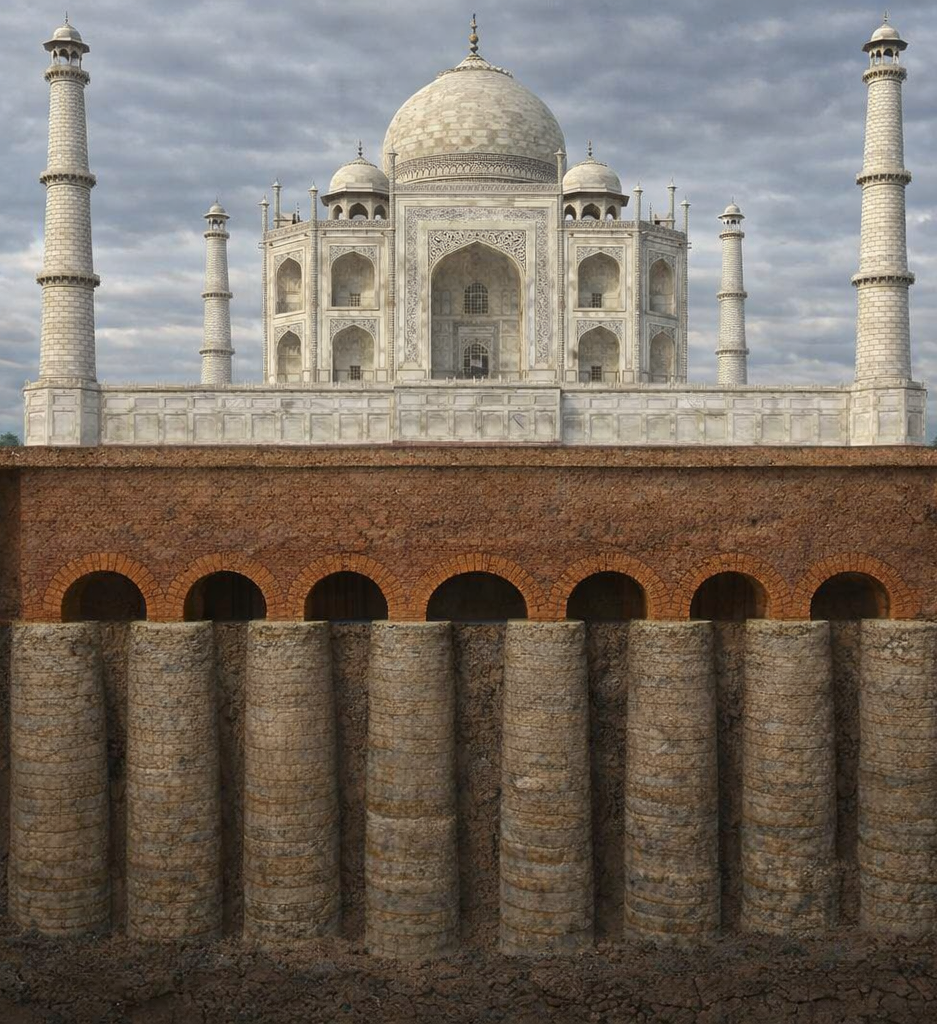
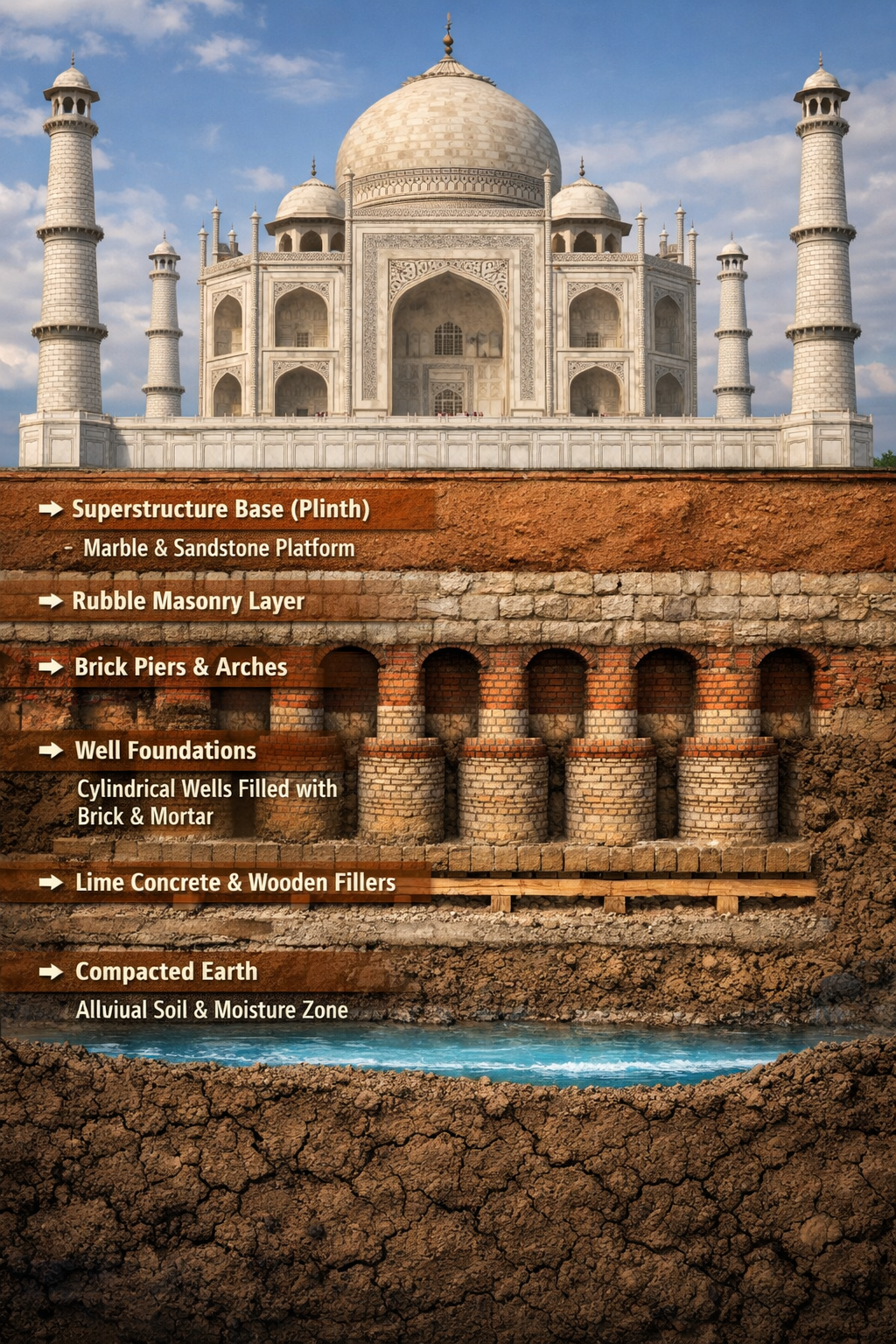
The structure rests on a foundation 17.5 meters deep. With around 64 well foundations and brick arch formations on top of it, the foundation has been holding 58000 metric tons of weight of the Taj Mahal for more than 400 years and many hundreds of years to come; hence, it is the perfect e.g. of world-class architecture.
Here is the detailed view of the Taj Mahal foundation for further understanding.
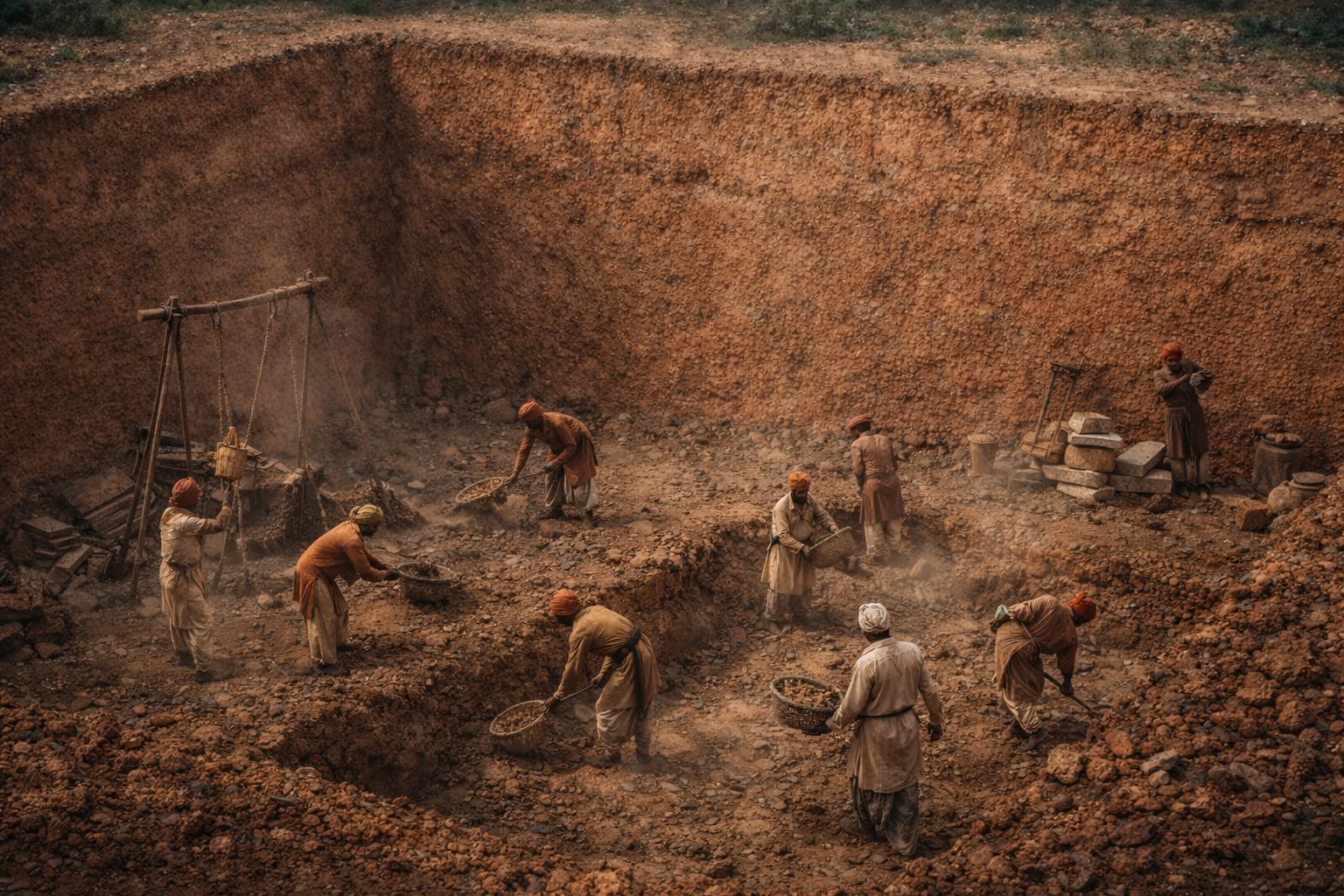
Excavation Pit Stage
To make the foundation both strong and deep, a pit around 20 meters deep was excavated.
Excavation Pit Stage
To make the foundation both strong and deep, a pit around 20 meters deep was excavated.
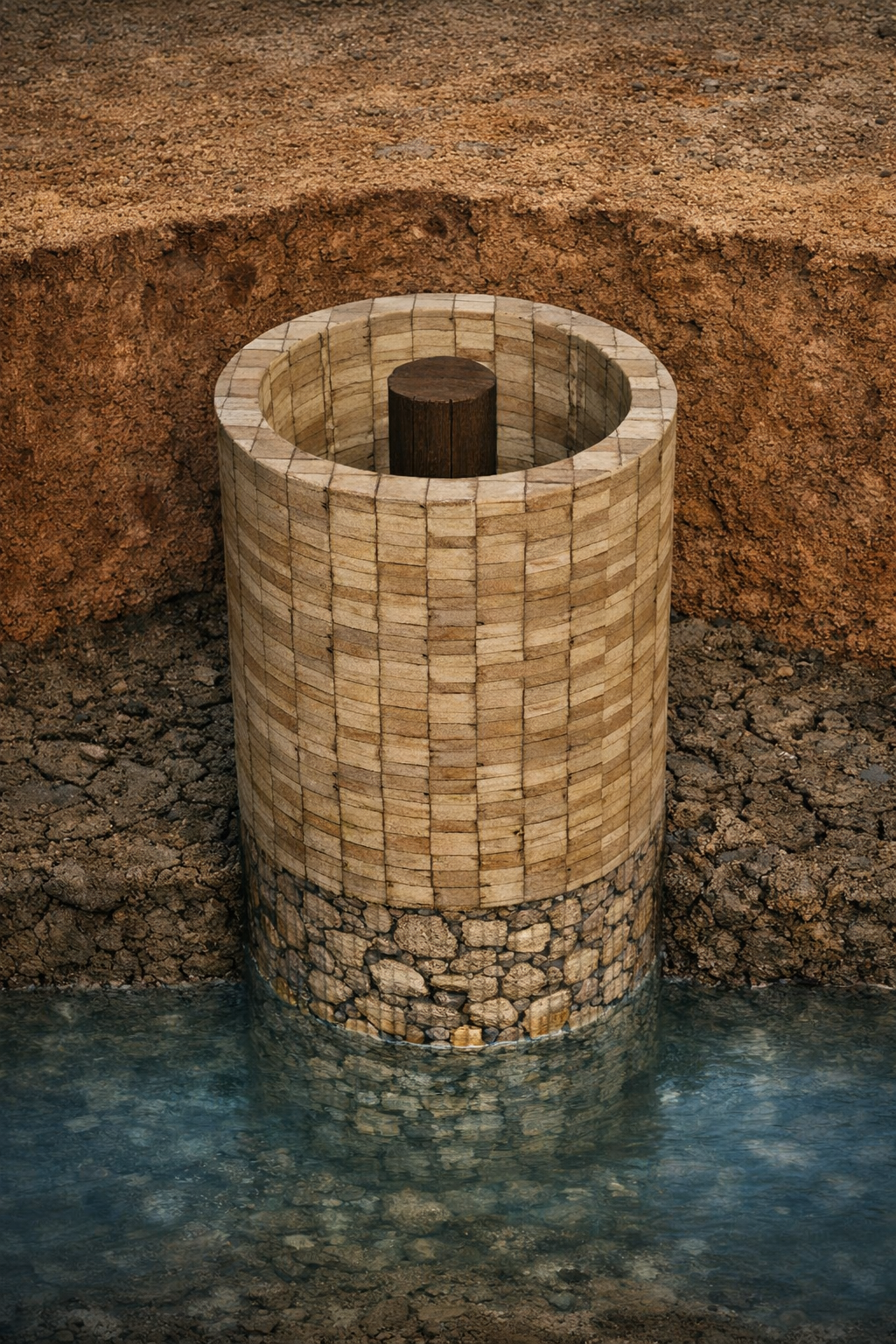
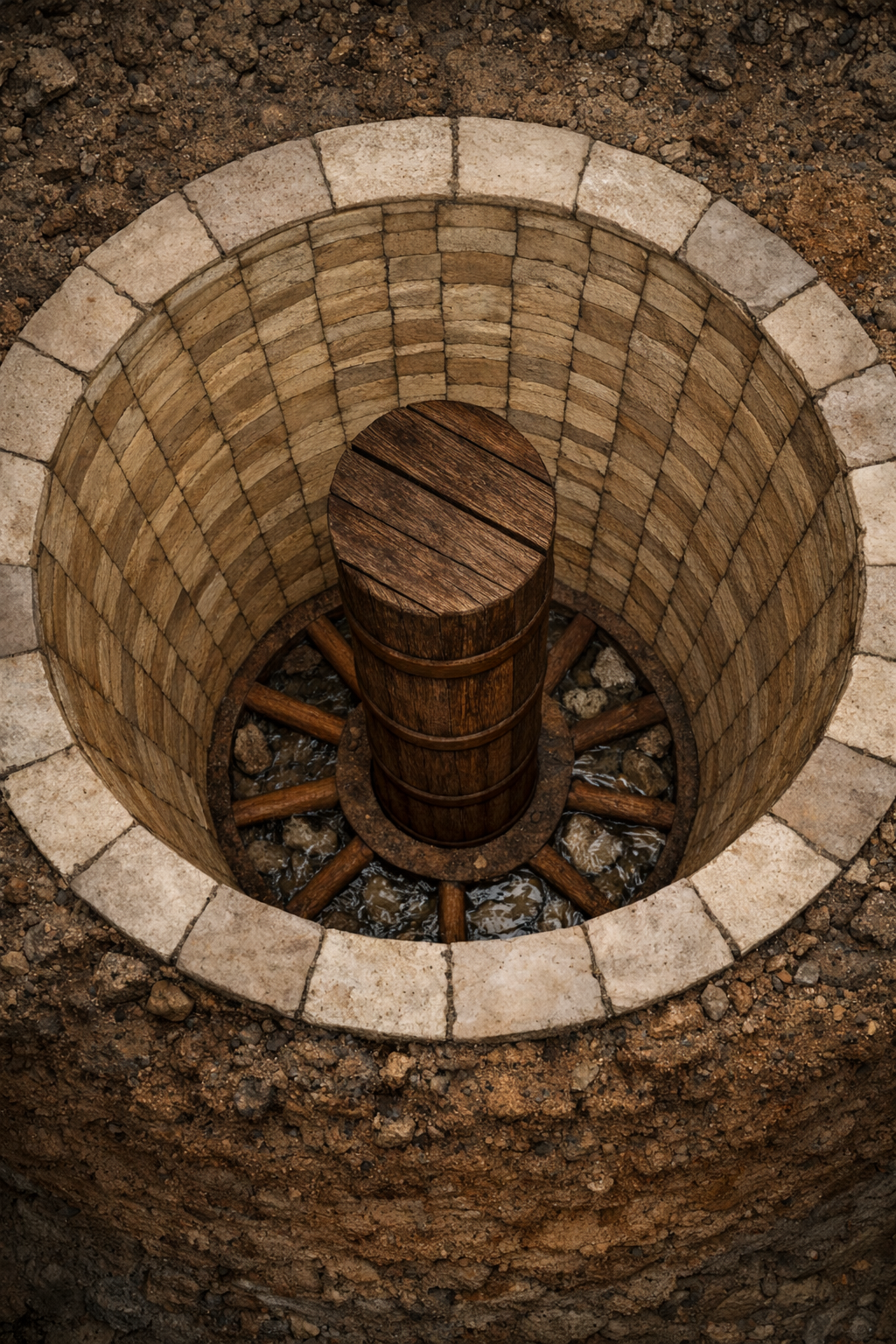
Brick Well Stage
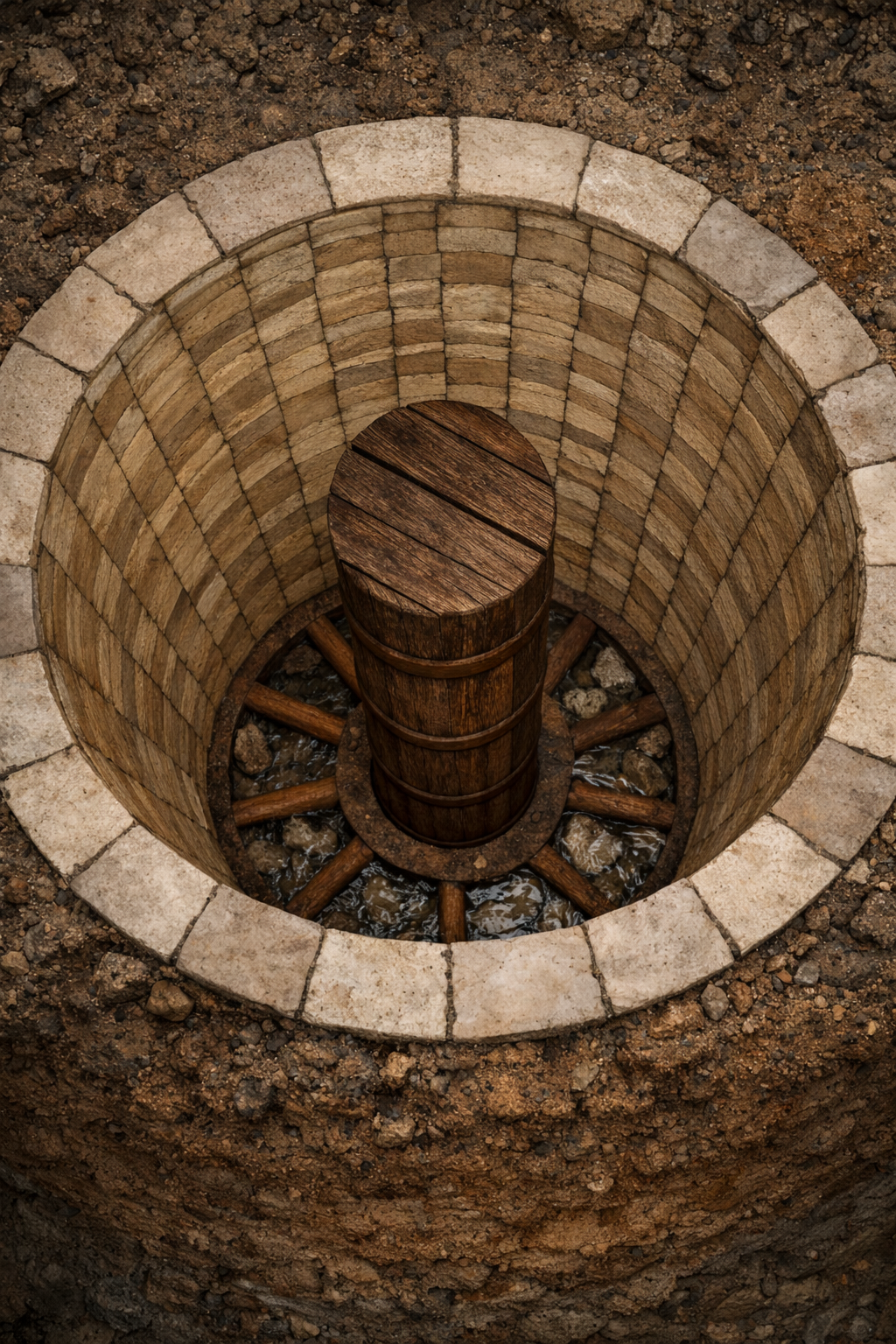
Furthermore, a cylindrical brick well foundation with shafts of ebony wood placed with each other accordingly. Ebony Woods not only holds the water but also strengthens the foundation. As a result, it acts as the shock absorber in case of an earthquake.
Brick Well Stage
Furthermore, a cylindrical brick well foundation with shafts of ebony wood placed with each other accordingly. Ebony Woods not only holds the water but also strengthens the foundation. As a result, it act as the shock absorber in case of an earthquake.
Finally, the Arch Structure to distribute the weight both equally and proportionally.
Arch making Stage
Finally, the Arch Structure to distribute the weight both equally and proportionally.
Have a detailed view of the foundation layer by layer.
With some more interesting and mind-blowing facts, we invite you to come and visit the most fabulous Taj.